

1, Dec 2025
Ice cream Sundae Toppings That Will Transform Your Dessert — 25 Irresistible Ideas
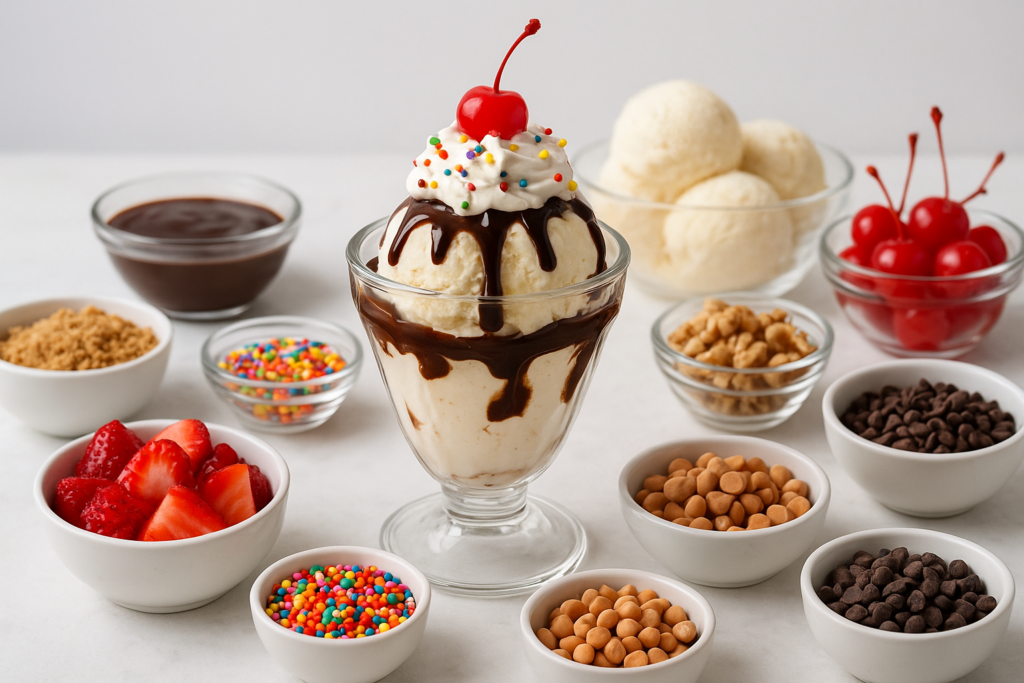
Ice cream sundaes may look simple at first glance, but the magic truly happens in the toppings. A scoop of ice cream on its own can be delightful, yet the right combination of sauces, crunch, fruit, and finishing touches can elevate a basic bowl into a memorable dessert experience. In this guide, I’ll walk you through classic, creative, and modern ice cream sundae toppings, along with practical tips that help you build sundaes people remember.
This article is written for real dessert lovers — home cooks, families, party hosts, and anyone curious about how thoughtful toppings can transform ice cream into something special.
Why Do Ice Cream Sundae Toppings Matter More Than You Think?
I often think of a sundae as a small design project. Ice cream forms the base, but toppings are where personality shows up. Texture, temperature, sweetness, and contrast all come together in a single bowl. A warm sauce over a cold scoop, or a salty crunch against creamy vanilla, wakes up your palate and keeps each bite interesting.
Toppings also prevent desserts from feeling one-dimensional. Sweet ice cream alone can feel flat, but when paired with tart fruit, bitter chocolate, or salty nuts, the flavors balance beautifully. This balance is what separates an ordinary dessert from a truly satisfying one.
Another reason toppings matter is flexibility. You can adapt the same ice cream to different moods, seasons, or guests. A cozy winter sundae may lean on caramel and toasted nuts, while a summer bowl shines with berries and citrus zest. The toppings tell the story.
Classic Sundae Toppings That Never Go Out of Style

Some toppings earn their place because they simply work — every time. These classics are worth keeping on hand.
Hot fudge sauce remains a favorite for good reason. Its rich, glossy texture creates instant contrast with frozen ice cream. Slightly warming the sauce before pouring adds a luxurious feel.
Caramel sauce, whether traditional or salted, brings deep sweetness and complexity. Salted caramel in particular balances sweetness and enhances other flavors.
Whipped cream adds lightness and visual appeal. It softens richer toppings and gives the sundae a finished look.
Chopped nuts such as peanuts, almonds, or walnuts introduce crunch and a mild savory note that cuts through sweetness.
Maraschino cherries may feel nostalgic, but they still deliver a bright pop of flavor and color that signals “classic sundae.”
Sprinkles are playful, colorful, and appealing to all ages. They may be simple, but they add texture and joy.
Unexpected Ice Cream Sundae Toppings That Surprise and Delight
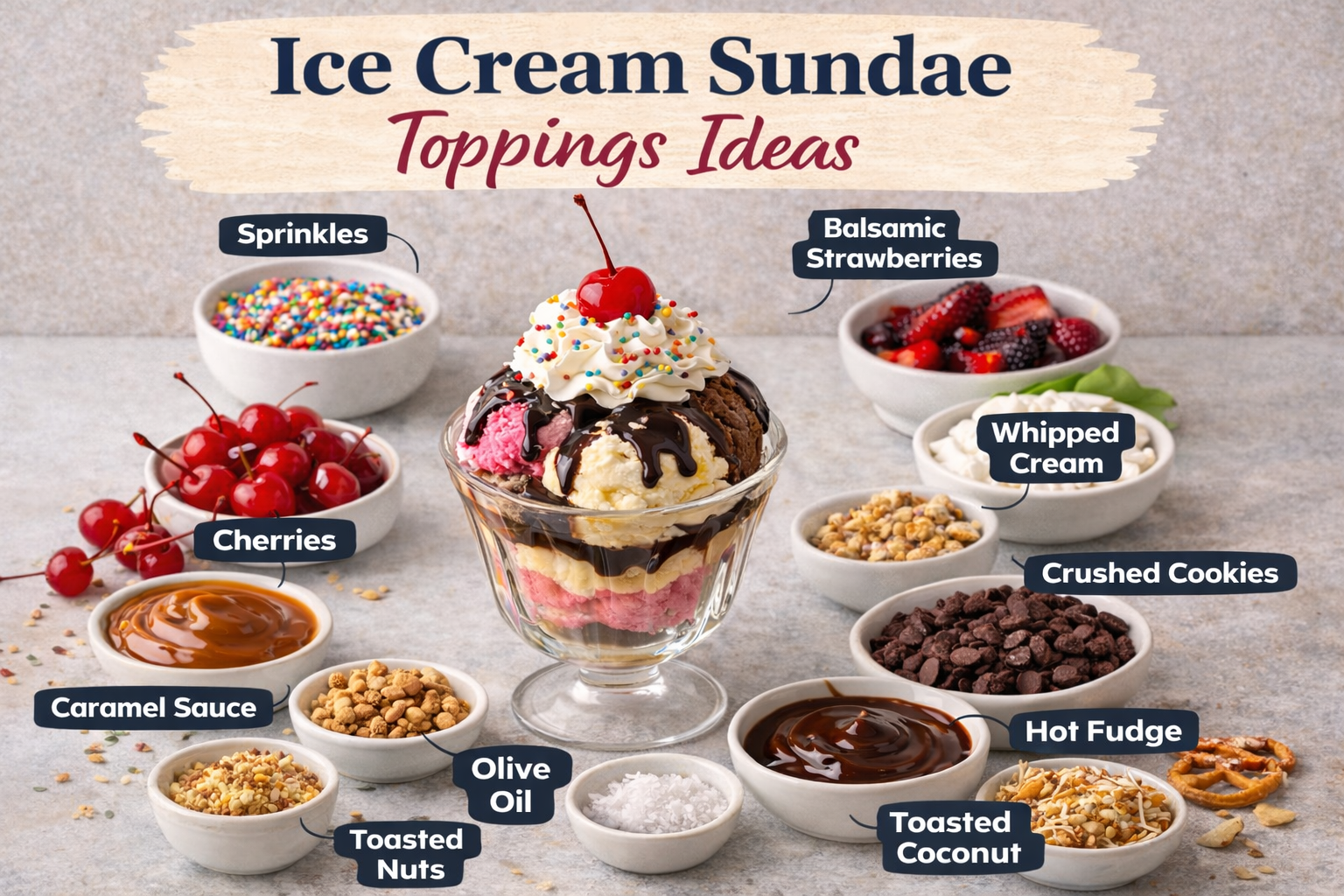
Once you’re comfortable with the basics, it’s fun to experiment. Unexpected toppings can turn a familiar dessert into a conversation starter.
A drizzle of extra virgin olive oil with a pinch of flaky sea salt works beautifully over vanilla or chocolate ice cream. The richness and salt create balance without overpowering sweetness.
Miso caramel adds subtle umami depth and complexity. It’s especially good with vanilla or banana ice cream.
Balsamic-glazed strawberries offer tang and sweetness at once, pairing well with creamy bases.
Toasted coconut flakes or sesame brittle add both crunch and aroma.
For spice lovers, a touch of chili chocolate, cayenne, or chili flakes in dark chocolate sauce introduces gentle heat that lingers pleasantly.
Even small details, like citrus zest or a splash of espresso in chocolate sauce, can transform a familiar topping into something new.
Fruit Toppings: Fresh, Macerated, and Preserved
Fruit toppings are essential for balancing rich ice cream flavors. They add freshness, acidity, and natural sweetness.
Fresh fruit such as berries, banana slices, mango, or citrus segments works best when added just before serving. Fresh fruit keeps its texture and brightness.
Macerated fruit — fruit gently tossed with sugar and a bit of lemon — creates a natural syrup that blends beautifully with ice cream. This works especially well with strawberries, peaches, or raspberries.
Preserved fruits like roasted plums, poached pears, or spiced apples offer depth and warmth. These are ideal for fall and winter sundaes.
Frozen fruit can also be simmered into quick sauces, offering a practical option when fresh fruit is out of season.
Crunchy Sundae Toppings for Texture Lovers
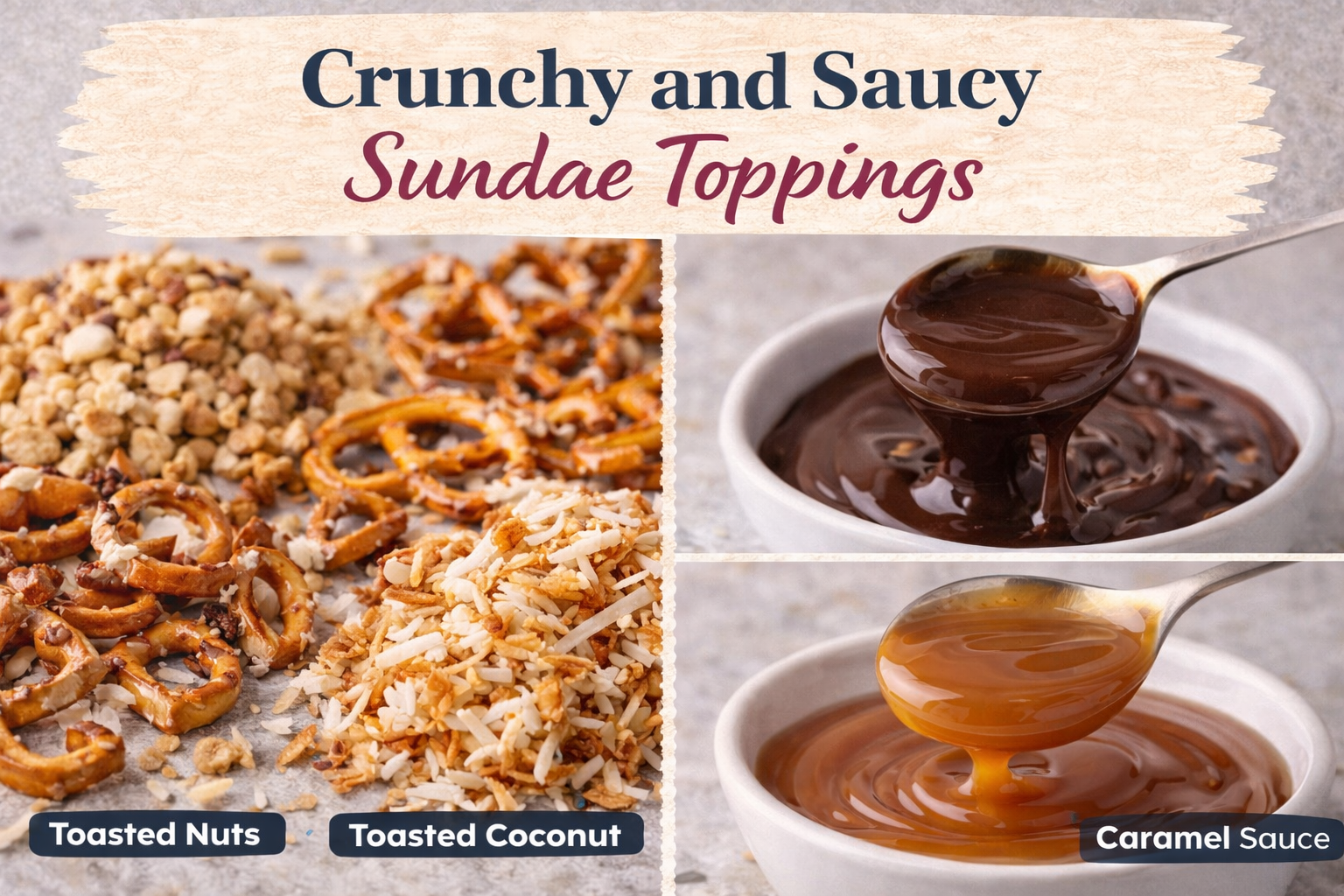
Crunch is often what makes a sundae memorable. Without it, desserts can feel too soft or heavy.
Popular crunchy toppings include:
- Crushed cookies or sandwich cookies
- Toasted nuts and nut pralines
- Granola or toasted oats
- Brittle made from nuts or seeds
- Crushed pretzels or cereal
Mixing two types of crunch — one light and one dense — adds interest. For example, pairing granola with brittle gives both crispness and chew.
Salted crunchy toppings are especially effective, as they balance sweetness and enhance flavor.
Homemade Sundae Sauces Worth Making
Homemade sauces often taste fresher and richer than store-bought versions, and most are surprisingly easy to prepare.
Chocolate ganache requires only chocolate and cream, melted together until smooth.
Hot fudge sauce benefits from a small amount of corn syrup or honey for shine and smoothness.
Caramel sauce made from sugar, butter, and cream offers depth that bottled versions can’t match.
Adding flavors like espresso, vanilla, citrus zest, or sea salt personalizes these sauces. Most homemade sauces keep well in the refrigerator for up to a week.
Vegan and Allergy-Friendly Ice Cream Sundae Toppings
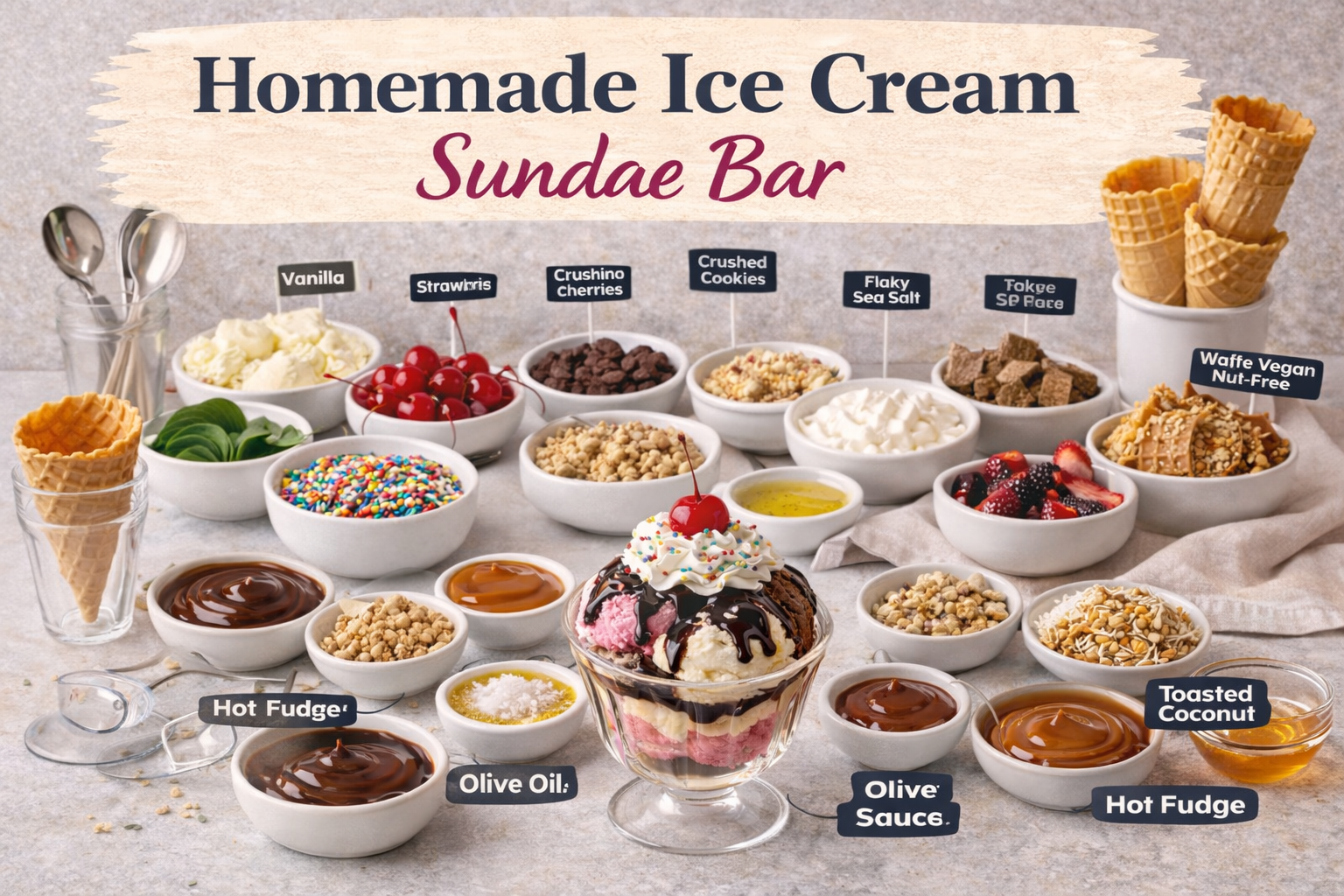
Building inclusive sundaes is easier than many people expect.
Vegan-friendly options include:
- Coconut or almond whipped cream
- Dairy-free chocolate sauce
- Toasted coconut, seeds, and oats
- Fruit compotes and fresh fruit
For nut-free needs, seeds such as sunflower or pumpkin provide crunch, while crushed pretzels or cookies offer texture.
Always label toppings clearly and keep serving utensils separate to prevent cross-contact, especially when serving groups.
How to Layer a Sundae for Maximum Impact
Layering matters just as much as ingredient choice.
Start with a small amount of sauce at the bottom, followed by ice cream, then crunch, fruit, and another scoop. Finish with sauce, whipped cream, and garnish. This ensures every bite includes multiple textures.
Place delicate toppings at the end so they stay crisp, and heavier ingredients lower so they don’t sink unpredictably.
Clear glass bowls show off layers beautifully and enhance presentation.
Storage, Prep, and Make-Ahead Tips
Many toppings can be prepared ahead of time:
- Sauces last up to a week refrigerated
- Candied nuts and brittle last weeks in airtight containers
- Fruit compotes keep several days
Keep wet and dry toppings separate until serving to maintain texture. For parties, a toppings bar lets guests customize while reducing last-minute stress.
Pairing Sundae Toppings With Ice Cream Flavors
Matching toppings to ice cream flavors enhances the overall experience.
Chocolate ice cream pairs well with tart fruit, coffee flavors, and toasted nuts. Vanilla acts as a blank canvas that works with almost everything. Fruity ice creams benefit from nutty or spicy toppings that ground their brightness.
Two or three complementary toppings often work better than many competing ones. The goal is to highlight the ice cream, not overwhelm it.
Frequently Asked Questions About Ice Cream Sundae Toppings
What are the must-have sundae toppings for a crowd?
Hot fudge, caramel, sprinkles, crushed cookies, and chopped nuts cover most preferences. Adding fruit and a dairy-free option ensures broader appeal.
How far in advance can I prepare sundae toppings?
Most sauces keep for about a week refrigerated, while crunchy toppings last several weeks if stored airtight.
Can I use fresh fruit without it becoming soggy?
Yes. Add fresh fruit just before serving to preserve texture and brightness.
Are savory sundae toppings a good idea?
Absolutely. Small amounts of sea salt, olive oil, or bacon bits add contrast and depth when used sparingly.
How can I accommodate dietary restrictions?
Use dairy-free ice cream bases, seed-based crunch, fruit toppings, and clear labeling to help guests make safe choices.
What is the easiest way to upgrade a basic sundae?
Warm your sauce before serving. The temperature contrast instantly makes the dessert feel more indulgent.
Final Thoughts
Ice cream sundaes are more than just dessert — they’re an opportunity for creativity, comfort, and connection. With thoughtful toppings, even a simple scoop can feel special. Whether you stick with classics or experiment with bold flavors, the key is balance, texture, and enjoyment.
At USA Food Blog, I believe food should tell a story. Sundae toppings may be small details, but they have the power to transform moments — one spoonful at a time.
- 0
- By Pankajatray
- December 1, 2025 19:59 PM