
1, Sep 2025
South American Food
History and cultural roots of South American food
The foundation of South American food is centuries deep, shaped by indigenous traditions, colonial influence, and migration. Long before European settlers arrived, native cultures like the Inca, Mapuche, and Guaraní developed rich foodways around corn, potatoes, quinoa, beans, and wild herbs. Terraced Andean farms turned steep mountains into living gardens, and those ancient techniques still feed people today.
When Spanish and Portuguese colonizers reached the continent, wheat, rice, cattle, and sugarcane rewrote daily menus. Beef-forward gatherings like asado and slow-cooked stews such as feijoada formed alongside ancient grains and tubers. African communities contributed spices, frying methods, and deep seasoning—proof that kitchens became the first melting pots.
Later waves from Italy, Germany, the Middle East, and Japan added even more personality. Think Neapolitan ideas in Buenos Aires pizza, buttery German tortes in Chile, or Nikkei cuisine in Peru blending Japanese technique with Andean produce. The result is a culinary mosaic that expands without losing its roots.
Staple ingredients that define South American cuisine
To understand the region, start with its pantry. Corn (maize) underpins tortillas, tamales, humitas, and arepas. Potatoes—thousands of Andean varieties—shift from creamy to waxy, purple to gold. Quinoa, once sacred, now feels both ancestral and modern. Cassava (yuca) becomes chewy pão de queijo, crisp fries, or silky purées.
Proteins tell another story. Beef and mutton shine in the Southern Cone, pork and chicken anchor Brazilian comfort, and coastal zones deliver pristine fish for ceviche and hearty seafood stews. Herbs and spices—cilantro, aji amarillo, rocoto, achiote, cumin—paint dishes with color and lift.
Then there’s fruit. Passionfruit, guava, soursop, papaya, and açai show up as juices, desserts, and sauces. Walk a market and it’s a rainbow—stalls stacked with produce you might be tasting for the first time.
Regional differences in South American food traditions
The Andes favor hearty, altitude-friendly cooking: potato-rich locro, corn-based tamales, and roasted meats slow-cooked for gatherings. On the Pacific coast, citrus and chili make seafood sparkle—ceviche is a calling card in Peru and Ecuador.
In the Southern Cone, grilling is a social ritual. Asado isn’t just dinner—it’s an afternoon of stoking coals, salting cuts, and telling stories. Across the Amazon, forest wisdom leads the menu with cassava breads, river fish, and aromatic leaves that perfume the pot.
Colombia and Venezuela share love for arepas, each with a signature twist. Chile celebrates long-coast seafood and homestyle stews. Bolivia leans into mountain fare like salteñas and the cozy purple-corn drink, api.
Iconic South American dishes everyone should know
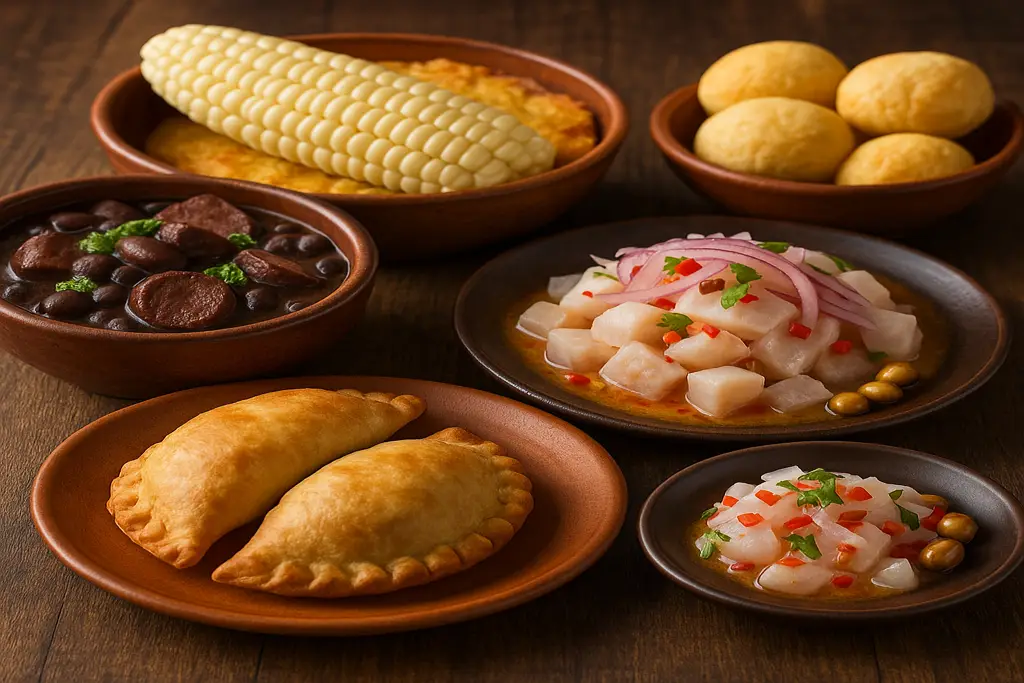
Ceviche sings with lime, chili, and fresh fish. Empanadas deliver flaky pastry filled with savory goodness—beef, cheese, or sweet corn. Feijoada, a Brazilian black-bean classic with pork, rewards a slow simmer and a hungry crowd.
Also on the list: arepas (Colombia, Venezuela), pão de queijo (Brazil), aji de gallina (Peru), and pastel de choclo (Chile). Each plate is edible history—simple ingredients turned into comfort.
Feeling adventurous? Try Andean cuy (guinea pig) prepared for special occasions or Uruguay’s chivito, a maximalist steak sandwich layering meat, cheese, and sauces.
Street food culture across South America
Street food is the region’s heartbeat. In Colombia, arepas and empanadas perfume busy corners. Peru’s anticuchos—grilled beef-heart skewers—taste smoky and tender. Brazil answers with coxinhas, teardrop croquettes filled with creamy chicken.
Markets buzz after dark in Bolivia and Ecuador, where grills sputter and juice vendors blend maracuyá to order. Many stands perfect a single item over generations, a family legacy served in paper boats.
It’s more than a quick bite. It’s how you meet a city—one handheld snack at a time.
Influence of indigenous flavors on South American food
Indigenous knowledge anchors everything from agriculture to flavor. Maize, potatoes, beans, and cassava didn’t just feed communities; they shaped identity. Clay pots, pit-roasting, and earth-oven techniques like pachamanca keep tradition alive.
Andean chilies—especially aji amarillo—brighten sauces and stews. In the Amazon, manioc becomes crisp farofa or chewy breads, and herbs from the forest add fragrance that no grocery aisle can mimic.
These flavors aren’t museum pieces. They evolve with each cook who learns from elders and adds a personal twist.
Modern twists on traditional South American recipes
Chefs across the continent remix classics with finesse. Lima’s dining scene pairs ancient roots with meticulous technique—quinoa plated like art, ceviche lifted by Amazonian fruit. São Paulo’s kitchens lighten feijoada and spotlight seasonal produce.
Empanadas show up with lamb and blue cheese, or roasted vegetables and chimichurri. Food trucks load arepas with global ideas—think charred mushrooms with garlic-lime crema.
Innovation doesn’t erase memory. It reframes it, letting heritage shine brighter.
The role of drinks and beverages in South American dining
Mate is a ritual as much as a drink—shared among friends in Argentina and Uruguay. Peru and Chile debate the origins of the Pisco Sour, while Brazil’s Caipirinha balances cachaça, lime, and sugar in refreshing harmony.
Beyond cocktails, fresh juices rule: maracuyá, guava, and açai energize mornings. The Andes warm up with api morado, and Colombia’s coffee culture needs no introduction.
Pairings matter because they carry stories of hospitality, harvest, and place.
Festivals and celebrations centered around South American food
Food turns gatherings into memories. Brazil’s Carnival fuels long days with skewers, pastries, and icy drinks. Peru’s Inti Raymi honors Inca heritage with communal roasts and corn-based sips.
Argentina’s National Asado Day is a love letter to the grill. Chile’s Fiestas Patrias means empanadas and choripán shared under spring skies. Coffee, arepas, and tropical fruit get festival spotlights in Colombia.
These moments protect tradition while inviting the next generation to take a seat at the table.
Where to experience authentic South American food worldwide
Nothing beats tasting dishes where they were born, but the flavors travel well. Major cities host Peruvian cevicherías, Argentine parrillas, and Brazilian churrascarias, often importing key items like aji pastes, yerba mate, and cassava flour.
In the U.S., Miami shines for Venezuelan and Colombian bites, while Los Angeles leans Peruvian. Europe and Asia are catching up fast, spotlighting Bolivian stews and Chilean seafood for curious diners.
Still, place matters. Mate at a Buenos Aires plaza, ceviche by Lima’s surf, feijoada in a Rio neighborhood—context adds seasoning you can’t bottle.
Conclusion
South American food is history you can taste—rooted in indigenous wisdom, shaped by migration, and energized by modern craft. We walked through building-block ingredients, regional styles, iconic plates, street stalls, sips, and celebrations that keep tradition alive.
Craving an adventure? Bookmark a local spot, try a new recipe this week, or plan a culinary trip. Then tell me what you loved most and why. Leave a comment, share this post with a foodie friend, and subscribe for more delicious deep dives.
Frequently Asked Questions
What are the must-try South American dishes for beginners?
Start with Peruvian ceviche, Argentine empanadas, Brazilian feijoada, Colombian arepas, and Chilean pastel de choclo. These classics cover seafood brightness, pastry comfort, and slow-cooked depth.
Which ingredients define South American food?
Maize, potatoes, cassava, beans, quinoa, aji peppers, cilantro, cumin, and tropical fruits like passionfruit and guava form the foundation across many countries and climates.
Is South American cuisine spicy?
Sometimes. Heat varies by region and recipe. Peru’s aji amarillo adds gentle warmth, while many Argentine and Brazilian plates highlight smoke, citrus, and herbs over chili fire.
What drinks pair well with South American dishes?
Mate for social sipping, Pisco Sour with citrus-forward plates, Caipirinha for rich or grilled foods, and fresh fruit juices or Colombian coffee for everyday meals.
Where can I find authentic South American food outside the region?
Seek out immigrant-run cevicherías, parrillas, and churrascarias in major cities. Smaller neighborhood restaurants often keep recipes closest to home traditions.
- 0
- By Pankajatray
- September 1, 2025 20:03 PM